Sun safety for babies and toddlers means protecting young children from strong sunlight, heat and dehydration during the warmer months. In the UK, the simplest and safest approach is shade first, cover up second and sunscreen third. Babies under 6 months should be kept out of direct sunlight completely. Babies over 6 months and toddlers need shade between 11am and 3pm, lightweight clothing, a wide-brimmed hat and at least SPF 30 broad-spectrum sunscreen. Little ones overheat far more quickly than adults, so keeping them cool and well hydrated matters just as much as protecting their delicate skin. This guide walks you through exactly how to keep your child safe and comfortable through a British summer, whether you are at home, at the park, at nursery or away on holiday.
Warm, sunny days are wonderful for young children. Fresh air and outdoor play support healthy development, and a little sunshine helps the body make vitamin D. With a few simple habits, you can let your child enjoy summer while keeping them protected.
Why is sun safety for babies and toddlers so important?

Young children are far more vulnerable to the sun and heat than adults. Their skin is thinner and contains less of the pigment that offers natural protection, so it burns more easily. Their small bodies also heat up quickly and lose fluid faster, which makes overheating and dehydration a real risk on hot days.
Sunburn in childhood is not just painful in the moment. It causes lasting skin damage and increases the risk of skin cancer later in life. The good news is that almost all of this is preventable with everyday routines that quickly become second nature.
It is worth remembering that you can burn in the UK even on a cloudy day, because a large amount of UV still passes through cloud. A helpful habit is to check the UV index on a weather app. When it reaches 3 or higher, it is time to protect your child’s skin. For the full national guidance, the NHS page on keeping your baby safe in the sun is an excellent reference.
If you would like to see how a nursery builds shade and gentle routines into a busy day, you are always welcome to visit us and take a look around.
How to keep babies under 6 months safe in the sun
For the youngest babies, the rule is simple. Keep babies under 6 months out of direct sunlight altogether. Their skin is too delicate for sun exposure, and sunscreen is not recommended for this age group.
Instead, rely on shade and clothing:
- Stay in the shade, especially in the middle of the day.
- Attach a parasol or clip-on sunshade to the pushchair so your baby is always shaded.
- Dress your baby in loose, lightweight clothing that covers arms and legs, plus a sunhat with a wide brim or a flap at the back.
- Never drape a blanket or muslin over the pram or pushchair to make shade. It traps heat and can cause your baby to overheat dangerously. Use a proper clip-on shade instead and check on your baby often.
If there is genuinely no way to keep a young baby out of the sun, dermatology guidance says a small amount of high-SPF sunscreen on tiny exposed areas such as the cheeks and backs of the hands is acceptable as a last resort, but shade and clothing should always come first.
Our youngest children spend their days in a calm, protected environment, and you can read more about how we care for them in our baby room at Purple Bees.
What sunscreen is best for babies and toddlers?

Once your baby is 6 months or older, sunscreen becomes an important extra layer of protection alongside shade and clothing. Look for these features when you buy:
- SPF of at least 30 to protect against UVB.
- Broad spectrum, meaning it protects against both UVA and UVB. Check for at least a 4-star UVA rating or the letters UVA inside a circle.
- A formula made for babies and young children, as these usually contain fewer additives that can irritate delicate skin. If one product causes irritation, a mineral sunscreen containing zinc oxide or titanium dioxide is often gentler.
How you apply it matters as much as which one you choose:
- Apply generously about 30 minutes before going outside.
- Cover every exposed area, including the face, ears, neck, feet and the backs of the hands.
- Reapply at least every 2 hours, and always straight after paddling, swimming, sweating or towel drying, even if the product says it is water resistant.
- With sprays, spray onto your own hand first and then smooth onto your child’s face, never directly at the face.
A gentle tip for wriggly toddlers: turn it into a game. Draw a shape on their arm with the cream and let them guess what it is, or let them help rub it in. Making it playful takes the battle out of the daily routine.
Sun safety tips for babies and toddlers on the go
Keep a small sun kit in your changing bag so you are never caught out: a spare hat, travel-size sunscreen, a muslin for shade over a car seat (never over a sleeping baby’s face), and a water bottle or beaker for older babies and toddlers. A little preparation makes spontaneous trips to the park far easier.
Looking for a nursery that cares for the whole child?
At Purple Bees Day Nursery in Hounslow, watchful, loving care comes as standard, from shaded outdoor play to gentle daily routines that keep little ones happy, cool and safe all summer long.
How should I dress my child for the sun?
Clothing is one of your most reliable defences, because it protects skin all day without needing to be reapplied. Aim for:
- Loose, lightweight clothing with a close weave. A quick test is to hold the fabric up to the light. The less light shines through, the better the protection.
- A sunhat with a wide brim or a legionnaire-style flap that shades the face, ears and back of the neck. Bucket-style hats that leave the face exposed offer far less protection.
- Sunglasses that carry the CE mark and British Standard, to protect young eyes from reflected glare off water, sand and pavements.
- UV-protective swimwear with sleeves for paddling pools and beach days, which covers far more skin than a standard costume.
Keeping babies and toddlers cool and hydrated in hot weather
Protecting skin is only half the picture. Keeping babies cool in hot weather is just as important, because overheating can happen quickly and even indoors.
Staying hydrated:
- Breastfed babies under 6 months do not need water. They may simply want to feed more often, and each extra feed keeps them hydrated. If you are breastfeeding, keep your own fluids up too.
- Formula-fed babies should have their milk made up as normal, with no extra water added. You can offer small amounts of cooled boiled water between feeds.
- Babies over 6 months who have started solids can have small sips of cooled boiled water from a beaker, alongside their usual milk.
- Toddlers should be offered water regularly throughout the day, ideally before they even ask for it.
Keeping cool:
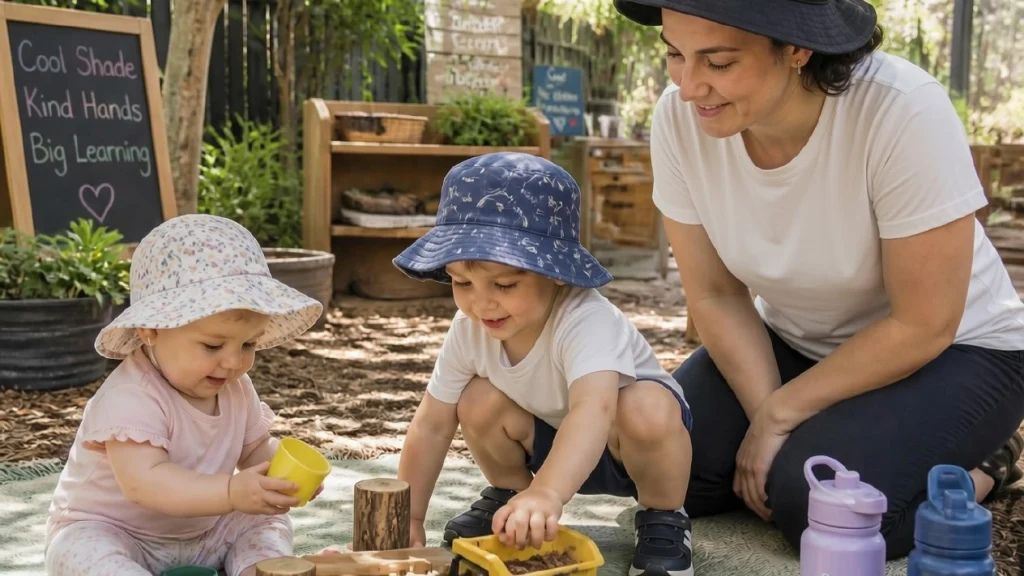
- Move play into the shade and rotate toys into shaded spots so children naturally follow.
- A paddling pool is a lovely way to cool down. Keep it in the shade and supervise closely at all times.
- At night, keep the bedroom cool by closing curtains and blinds during the day and airing the room. A baby sleeps most comfortably when the room is between 16C and 20C. Keep nightwear and bedding light. A fan can help circulate air, but do not aim it directly at your child.
- Never leave a child in a parked car, even for a moment. The inside temperature can climb by more than 10 degrees in just ten minutes.
Because keeping babies out of strong sun also limits how much vitamin D their bodies can make, the NHS advises that all children under 5 take a daily vitamin D supplement. Many families are eligible for free Healthy Start vitamins, so it is worth checking.
Water play is also a brilliant way to keep toddlers cool and engaged, and you will find plenty of ideas in our guide to water play and sensory activities for little ones.
Sun safety for babies and toddlers: recognising heat exhaustion and heatstroke

Knowing the warning signs of overheating gives you confidence to act quickly. Heat exhaustion is uncomfortable but usually manageable at home. Heatstroke is a medical emergency.
Signs of heat exhaustion in a child may include:
- Tiredness, irritability or being unusually clingy
- Heavy sweating with pale, clammy skin
- A headache, dizziness or feeling sick
- Fast breathing or a fast pulse
- Strong thirst and muscle cramps
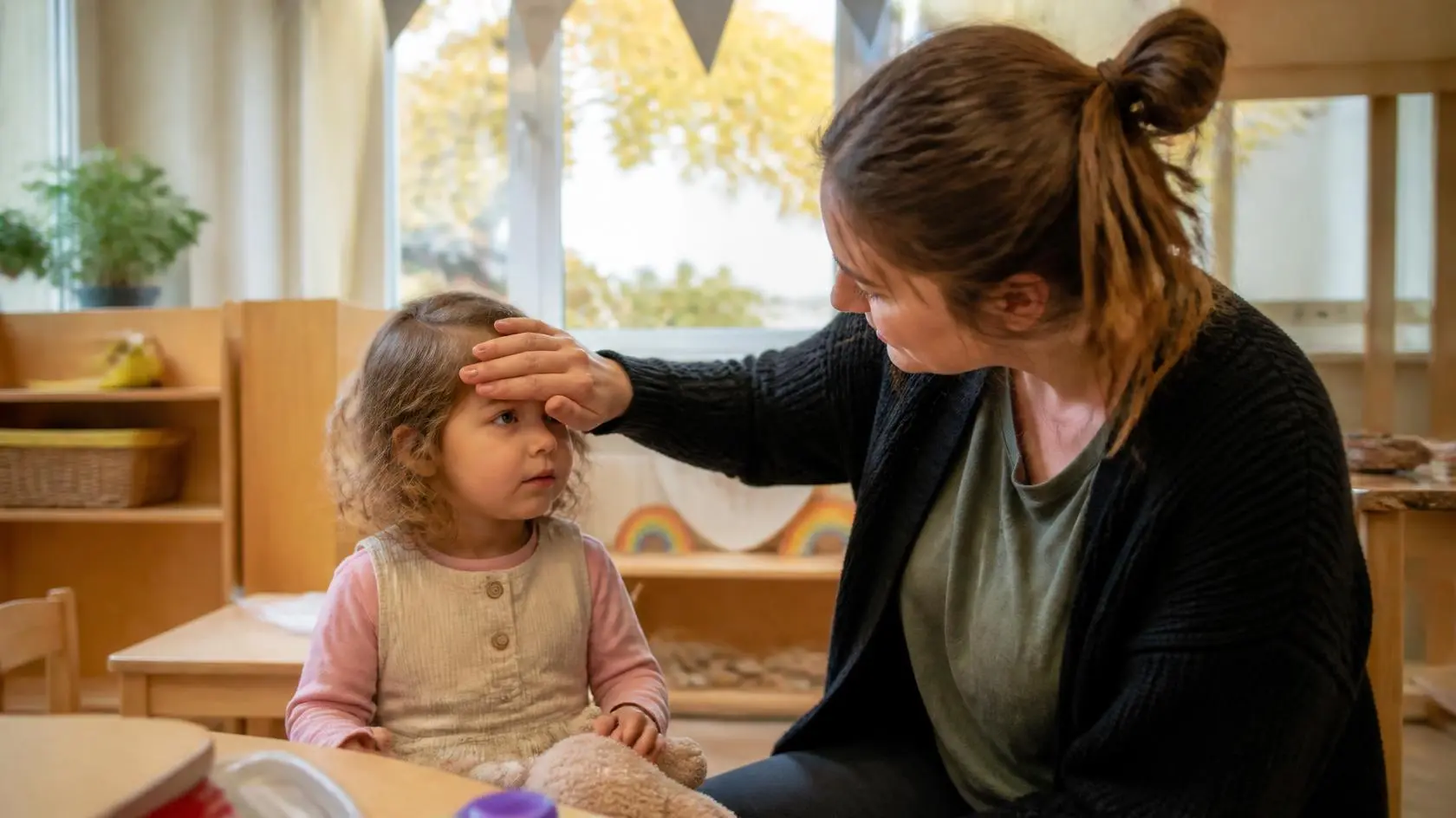
If you notice these signs, cool your child down straight away. Move them into shade or a cool room, remove extra clothing, sponge their skin with cool water, place cool packs at the neck and armpits, and offer sips of cool water if they are alert. Most children improve within 30 minutes.
When should I call 999?
Heatstroke needs urgent help. Call 999 if your child shows any of these signs, or if they are still unwell 30 minutes after cooling:
- Very hot skin that may have stopped sweating
- Confusion, extreme drowsiness or not responding normally
- A high temperature of around 40C
- A seizure, or loss of consciousness
While you wait for the ambulance, keep cooling your child with cool wet cloths or a fan, and put them in the recovery position if they are unconscious. For full details, see the NHS guidance on heat exhaustion and heatstroke. If you are ever worried but unsure, you can call NHS 111 for advice at any time.
| Age | In the sun | Sunscreen | Staying cool and hydrated |
|---|---|---|---|
| Under 6 months | Keep out of direct sunlight. Use shade and a pram parasol. Never cover the pram. | Not recommended. Rely on clothing and shade. | Extra breast or formula feeds. No water needed under 6 months. |
| 6 to 12 months | Shade between 11am and 3pm. Hat and light cover-up clothing. | SPF 30+ broad spectrum. Reapply often. | Usual milk plus small sips of cooled boiled water once weaning. |
| Toddlers 1 to 3 years | Shade at midday. Wide-brimmed hat, sunglasses, UV swimwear. | SPF 30+ broad spectrum. Reapply every 2 hours and after water. | Offer water regularly. Watch for overheating. Vitamin D advised. |
A simple daily sun safety routine that works
The families who find summer easiest are usually the ones who turn protection into a habit rather than a daily decision. A routine might look like this: dress your child in light, covering clothes and a hat in the morning, apply sunscreen to any exposed skin before you head out, seek out shade around the middle of the day, and keep water within easy reach. Reapply sunscreen after lunch and after any water play, and head somewhere cool during the hottest hours.
These same gentle rhythms are what a good nursery builds into every warm day, alongside all the fun of the season. If your toddler is also getting to grips with big milestones this summer, you may find our guide on making the most of the warmer months for potty training useful too. To see how our team weaves outdoor play, shade and care together, you are welcome to explore our toddler rooms.
Conclusion
Sun safety for babies and toddlers does not need to be complicated. Keep babies under 6 months out of direct sunlight, shade older babies and toddlers during the hottest part of the day, dress them in light clothing and a good hat, use at least SPF 30 broad-spectrum sunscreen from 6 months, and keep little ones cool and well hydrated. Learn the signs of overheating so you can act quickly, and never hesitate to call 111 or 999 if you are worried. With these simple habits, your child can enjoy every sunny day of a British summer safely and happily.
Give your child a summer full of safe, happy days
Purple Bees Day Nursery in Hounslow cares for children from 3 months to 5 years with warmth, watchfulness and genuine love. Come and see it for yourself and feel the difference.
Or call us on 020 8572 1919
Related Posts
- Why sensory play for babies matters
- Potty training in summer: a UK parent’s step-by-step guide
- How to settle a child into nursery: a gentle guide for parents
- Best nursery in Hounslow 2026: a parent’s guide to choosing the right childcare
The safest routine follows shade first, cover up second and sunscreen third. Keep babies under 6 months out of direct sun entirely. For older babies and toddlers, seek shade between 11am and 3pm, dress them in light clothing and a wide-brimmed hat, apply SPF 30+ sunscreen to exposed skin, and keep them cool and hydrated throughout the day.
Sunscreen is not recommended for babies under 6 months. Their skin is too delicate, so shade and clothing should do the work instead. Only if there is genuinely no shade available, a small amount of high-SPF sunscreen on tiny exposed areas such as the cheeks is considered acceptable as a last resort.
Choose a broad-spectrum sunscreen with an SPF of at least 30 that protects against both UVA and UVB, ideally with a 4-star or 5-star UVA rating. Products made for babies and young children are less likely to irritate the skin. Reapply at least every 2 hours and after any water play.
Watch for tiredness, irritability, flushed or clammy skin, heavy sweating, a headache or being unusually thirsty. Move them somewhere cool, remove extra layers, offer water and sponge them with cool water. If they do not improve within 30 minutes or seem confused or very drowsy, seek urgent medical help.
Yes. Because sun protection limits how much vitamin D the body makes, the NHS advises that all children under 5 take a daily vitamin D supplement. Many families qualify for free Healthy Start vitamins, so it is worth checking your eligibility.
Heatstroke is a medical emergency. Signs include very hot skin, confusion, extreme drowsiness, a temperature around 40C, a seizure or loss of consciousness. Call 999 immediately. Good sun safety, meaning shade, cool clothing, hydration and avoiding the midday sun, is the best way to prevent overheating from ever reaching this point.