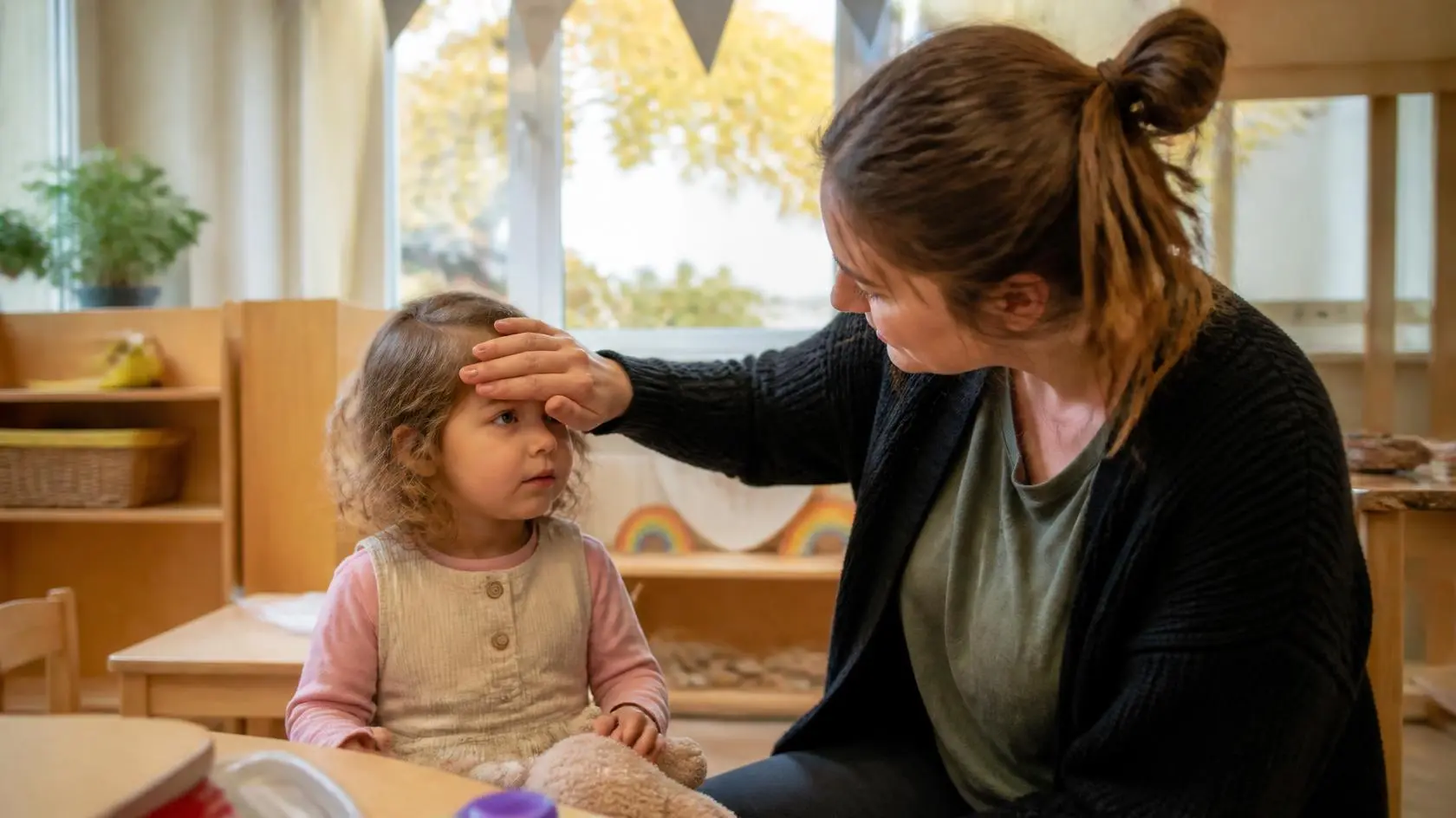
If your child has a mild cough, runny nose or slight sore throat but otherwise seems well, they can usually still go to nursery. Keep them home if they have a high temperature, are vomiting, have diarrhoea, or seem generally unwell, and let your nursery know the reason as soon as possible.
Every September, as the weather turns and children head back into busy nursery rooms full of new faces and shared toys, something predictable happens: the coughs start. If this is your first nursery illness season UK autumn, or your third, it can still be hard to know exactly where the line is between “a bit snotty but fine” and “needs to stay home today.” This guide walks Hounslow parents through what is normal, what the NHS recommends, and how Purple Bees Day Nursery approaches illness during the autumn months, so you can make confident decisions without second-guessing yourself at 7am.
Why Autumn Is Nursery Illness Season UK Wide
Nursery illness season UK wide tends to peak between September and November for a simple reason: young immune systems are still learning. A toddler in their first year of group childcare can pick up eight to twelve more colds than a child who stays at home, simply because they are meeting far more germs, far more often, in close contact with other children.
Add in cooler weather, more time spent indoors, and the return of the wider “back to school” bug season across schools and nurseries nationwide, and September becomes one of the busiest months of the year for coughs, colds and mild stomach upsets in early years settings.
This is completely normal, and it is not a sign that anything is wrong with your child’s health or your nursery’s hygiene standards. If you are still weighing up nurseries, our guide to choosing the best nursery in Hounslow covers what to look for in a setting’s health and hygiene approach. Most parents notice that each nursery illness season UK autumn brings gets a little easier as their child builds up natural resistance over their early years.
When Should a Child Stay Off Nursery?

This is the question we are asked most often during nursery illness season UK wide, and the honest answer is that it depends on the symptom. NHS guidance offers some clear starting points.
Mild Cough or Runny Nose
If your child has a slight cough, a runny nose or a mild sore throat but is otherwise their normal self, eating, playing and in good spirits, they can usually still attend nursery. Encourage plenty of tissues and handwashing, and let their key person know so we can keep an extra eye on them during the day.
High Temperature
If your child has a high temperature, they should stay home until it has fully settled. A raised temperature is often one of the clearest signs that a child needs rest at home rather than a full day of nursery activities.
Vomiting or Diarrhoea
Children with diarrhoea or vomiting should stay away from nursery until they have been clear of symptoms for at least 48 hours. This rule exists to protect the whole nursery room from a wider stomach bug outbreak, and it is one of the few areas where the 48-hour guidance is very consistent across the NHS and early years settings.
Chickenpox
If your child has chickenpox, they should stay off nursery until all the spots have crusted over, which is usually around five days after the spots first appear.
Conjunctivitis, Cold Sores and Head Lice
Interestingly, your child does not usually need to stay off nursery for these. A quick note to your child’s key person is enough so we can be mindful, but treatment can usually happen alongside normal attendance.
When in Doubt
If you are ever unsure, it is always fine to call the nursery and talk it through with your child’s key person. We would always rather have a two-minute conversation in the morning than have you guessing alone.
Not Sure If Today Is a Nursery Day?
Our Hounslow team is always happy to help you decide. Give us a quick call any weekday morning.
Call us on 020 8572 1919Common Autumn Illnesses During Nursery Illness Season UK Parents Should Know

Understanding what is actually going around can make the whole season feel less overwhelming. Here are the illnesses we see most often during nursery illness season UK settings each autumn.
The Common Cold
By far the most frequent visitor. Runny nose, mild cough, maybe a low-grade temperature for a day or two. Usually clears within a week to ten days with nothing more than rest, fluids and comfort.
Coughs and Chest Infections
A cough that lingers after a cold has otherwise cleared is common in young children and is not usually a cause for concern on its own. A cough paired with fast or laboured breathing, or one that is getting worse rather than better after a week, is worth a GP or pharmacist check.
Hand, Foot and Mouth Disease
Very common in nursery-aged children during autumn and winter. Small blisters on the hands, feet and inside the mouth, sometimes alongside a mild fever. Children do not usually need to be excluded from nursery unless they are generally unwell or have open, weeping blisters, but do let your key person know.
Stomach Bugs
Short, sharp and usually gone within a couple of days. The 48-hour clear rule (from last episode of vomiting or diarrhoea) applies here to protect the wider nursery.
Ear Infections
Often follow on from a cold. Look out for your child pulling at their ear, seeming more unsettled than usual, or a temperature that does not seem to match a simple cold. Worth a GP check if symptoms persist.
How Long Nursery Illness Season UK Autumn Typically Lasts
Most families find the heaviest run of coughs and colds settles by late November, though individual bugs can circulate right through winter. Each illness on its own is usually short-lived, even if it can feel like one thing follows another during the peak months.
What Purple Bees Does to Support a Healthy Autumn Term
Prevention matters just as much as knowing when to keep a child home. Throughout nursery illness season UK autumn and winter, our Hounslow team focuses on:
- Regular, supported handwashing built into the daily routine, before meals, after outdoor play and after toileting
- Thorough cleaning of toys, surfaces and shared equipment throughout the day, not just at the end of it
- Fresh air and outdoor time wherever weather allows, since ventilation genuinely helps reduce the spread of airborne illness
- Clear, early communication with families the moment we notice a symptom, so you are never caught by surprise at pickup
- A calm, unhurried approach if your child does become unwell during the day, with comfort from their key person while we contact you
We know that balancing work, other children and a nursery-aged child who is a little under the weather is genuinely difficult. Our aim is always to make that process as smooth and well communicated as possible, not to add extra stress to an already tiring week.
| Symptom | Can they go to nursery? | Guidance |
|---|---|---|
| Mild cough or runny nose | Yes | Attend as normal if otherwise well |
| High temperature | No | Stay home until temperature has gone |
| Vomiting or diarrhoea | No | Stay home for 48 hours after last episode |
| Chickenpox | No | Stay home until all spots have crusted over |
| Conjunctivitis | Yes | Attend as normal, inform key person |
| Cold sore | Yes | Attend as normal, avoid sharing cups |
| Head lice | Yes | Attend as normal, treat at home |
How to Help Your Child Bounce Back
A few simple things can help shorten the miserable few days of a typical autumn cold or bug:
- Plenty of fluids, little and often, especially if there has been any vomiting or diarrhoea
- Extra rest, even if that means an earlier bedtime or a quieter weekend than planned
- Comfort over cure, a cuddle and a favourite blanket do more for a poorly toddler than most things in the medicine cabinet
- Paracetamol or ibuprofen if recommended by your pharmacist or GP for a high temperature, following packet guidance for their age and weight
- A call to your pharmacist first for anything that feels uncertain, since UK pharmacists are a genuinely excellent, fast source of advice for minor childhood illnesses
Conclusion
Nursery illness season UK wide is a normal, temporary part of the early years, not a sign that something has gone wrong. Most autumn coughs, colds and minor bugs pass through quickly, and knowing the simple rules around fever, sickness and diarrhoea takes most of the guesswork out of those tricky morning decisions. If your child is moving rooms this term, our guide to moving up to the toddler room may also help. If you are ever unsure whether today is a nursery day, our Hounslow team is always just a phone call away.
Looking for a Nursery That Supports Your Family All Year Round?
From settling-in to sniffle season, our Hounslow team is here for every stage. Book a tour or get in touch to find out more.
Related Posts
- Best Nursery in Hounslow: How to Choose the Right One
- Moving Up to the Toddler Room: A Gentle Guide for Parents
- School Readiness Checklist: How to Prepare Your Child for Reception in September
Not usually. If your child has a mild runny nose, slight cough or sore throat but is otherwise well, they can normally still attend nursery. Keep them home if they develop a high temperature. This is one of the most common questions parents ask during nursery illness season UK wide.
The most common are colds, coughs, hand, foot and mouth disease, stomach bugs and ear infections. All are a normal part of nursery illness season UK wide, particularly for children new to group childcare.
Children should stay off nursery for at least 48 hours after their last episode of vomiting or diarrhoea, in line with NHS guidance.
No, these do not usually require exclusion from nursery, though it is helpful to let your child’s key person know.
Young children in group childcare are exposed to far more germs than children who stay at home, and their immune systems are still building resistance. It is common, and it settles as they get older.
If your child has a high temperature that will not come down, breathing that seems fast or laboured, a rash that does not fade under pressure, or seems significantly more unwell than a typical cold, contact your GP or NHS 111 for advice.