Speech and language milestones are the typical stages children move through as they learn to understand words and to talk, from first coos and babbles to full conversations. Broadly, most children say their first words around their first birthday, start joining words together by two, speak in short sentences by three, and chat clearly by the time they start school. Every child is different, though, so these are guides rather than deadlines. What matters most is steady progress and a child’s desire to communicate through sounds, gestures, eye contact and words. This guide sets out speech and language milestones from birth to five, simple ways to support talking at home, and the signs that mean it is worth seeking a little extra help. Above all, it is here to reassure you and help you enjoy watching your child find their voice.
Language is one of the most exciting parts of your child’s early development, and you play a huge role in it, simply by chatting, singing and playing together every day.
What are speech and language milestones?

Speech and language milestones describe two connected skills. Language is understanding and using words to communicate, while speech is the physical act of talking and making sounds clearly. Children usually understand far more than they can say, especially in the early years.
Rather than counting words alone, health professionals look at the whole picture: is your child keen to communicate, making eye contact, taking turns in play, following simple directions and using gestures? These signals matter just as much as hitting an exact word count on an exact birthday.
Children develop at their own pace, and a wide range is completely normal. Milestones are a helpful map, not a race.
Speech and language milestones by age
Here is a gentle guide to the speech and language milestones many children reach between birth and five. Try not to worry if your child is a little ahead or behind in places. Progress over time is what counts.
| Age | What many children are typically doing |
|---|---|
| By 12 months | Babbles in tuneful strings, tries first words like “mama” or “dada”, responds to their name, understands simple words such as “no” and “bye”, and uses gestures like pointing and waving. |
| 12 to 18 months | Says around 5 to 20 words, understands many more, points to things they want and to familiar objects when named, and follows simple instructions like “give me the cup”. |
| 18 to 24 months | Vocabulary grows quickly towards 50 words and beyond, starts joining two words together such as “more juice”, and points to body parts. Speech is often unclear, which is normal. |
| 2 to 3 years | Uses short sentences of 2 to 4 words, asks lots of questions, uses words like “I”, “you” and “me”, follows two-part instructions, and is understood by familiar adults much of the time. |
| 3 to 4 years | Speaks in longer sentences, tells simple stories, is understood by people outside the family most of the time, knows their name, age and some colours, and asks “why” often. |
| 4 to 5 years | Speaks clearly in full sentences, describes events and tells longer stories, uses grammar mostly correctly, follows longer instructions, and holds proper back-and-forth conversations. |
For a fuller stage-by-stage guide, the charity Speech and Language UK has a lovely ages and stages resource, and the NHS offers clear advice on children’s speech and language.
Curious how nursery nurtures early talking? You are always welcome to come and see it in action.
How can I support my child’s speech and language development at home?

You do not need special toys or training. The best thing for your child’s language is simply time talking and playing with you. Small, everyday moments add up to powerful learning.
- Talk about what you are doing as you do it, like “now we are pouring the water” during bath time.
- Get down to your child’s level, follow their lead, and comment on what interests them rather than quizzing them.
- Repeat and add a word. If they say “car”, you might say “yes, a fast red car”.
- Share books every day, and enjoy songs and nursery rhymes together.
- Give your child time to respond, and really listen when they do.
- Keep screens for later and use quiet times for chatting, reading and playing.
Play is where so much language grows, especially playful, sensory experiences that give children something exciting to talk about. For hundreds of free, age-based talking activities, BBC Tiny Happy People is a wonderful resource.
A language-rich nursery where every child is heard
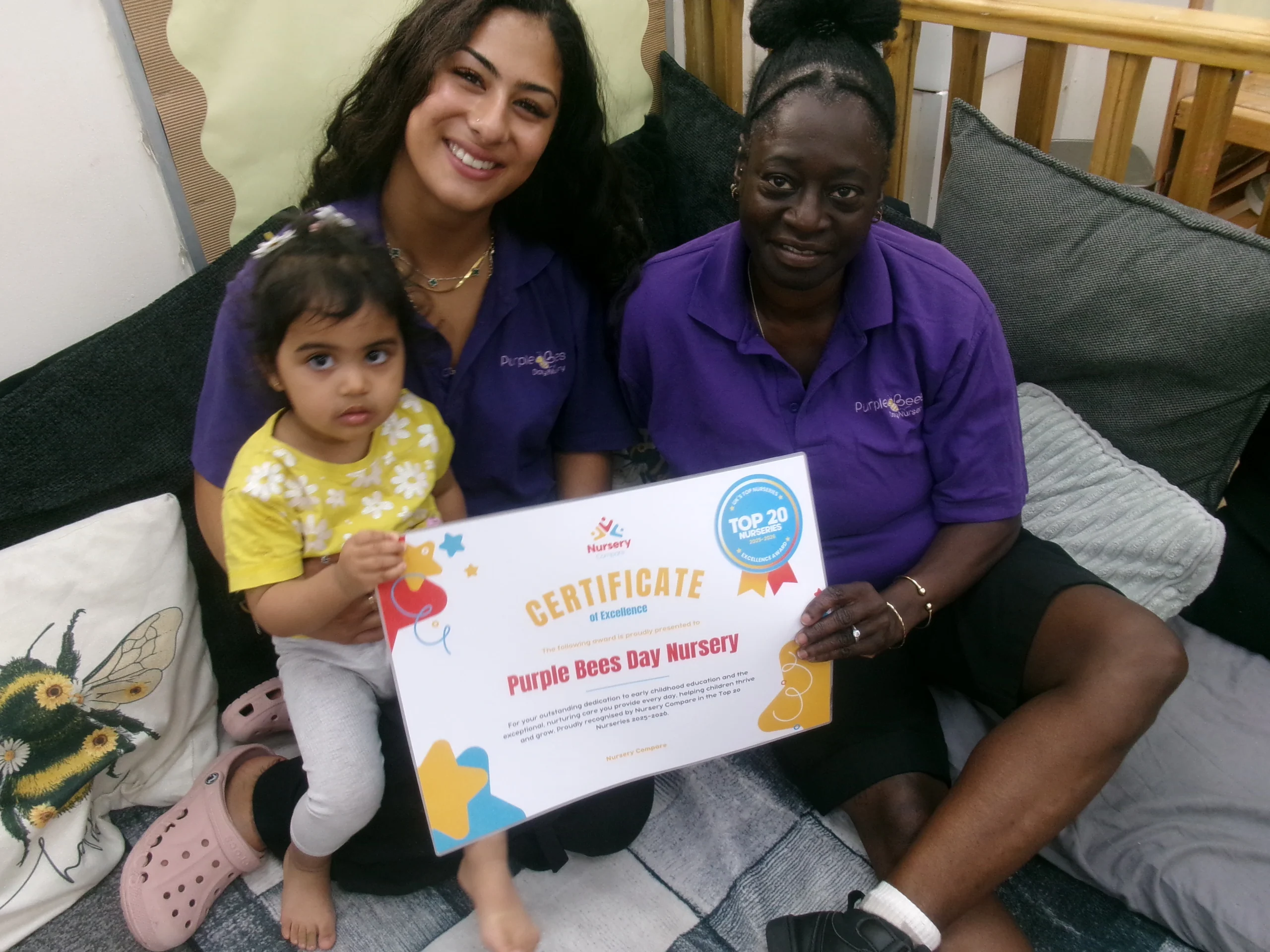
At Purple Bees Day Nursery in Hounslow, our warm, experienced team weaves talking, singing, stories and play through every day, helping children grow into confident communicators. Come and listen in.
When should I worry about speech and language milestones?
First, take a breath. Many children who are a little slower to talk simply catch up in their own time. Still, trusting your instincts matters, and getting support early is always a positive step, never something to feel anxious about.
Speech and language milestones: signs it may help to seek advice
It is worth having a friendly chat with a professional if your child:
- Is not babbling or using gestures like pointing and waving by around 12 months.
- Has very few or no words by around 18 months.
- Is not putting two words together by around two to two and a half years.
- Is very hard to understand at three years old.
- Does not seem to understand simple instructions, or rarely responds to sounds or their name, which can sometimes point to hearing.
- Loses words or skills they previously had.
If any of this sounds familiar, you do not need to wait and see. Speak to your health visitor or GP, who can arrange a hearing check and, where helpful, refer your child to a speech and language therapist. In many areas parents can self-refer to their local NHS service. Your child’s nursery key person can also share what they notice day to day. Early help is gentle, play-based and effective.
What about bilingual children?
Growing up with more than one language is a gift, not a disadvantage. Learning two or more languages does not cause speech and language delays. Your child may mix languages at first, which is completely normal, and it helps to count all the words they know across every language. Keep speaking the language you are most confident and comfortable in at home, as rich, natural conversation is what supports your child best.
How nursery supports speech and language milestones
A good nursery is a language-rich place, full of stories, songs, conversation and play that gives children real reasons to communicate. Skilled early years educators know how to follow a child’s interests, model new words, and gently extend what each child can do, all within the Early Years Foundation Stage framework.
Being around other children matters too, offering endless chances to listen, take turns and chat. If you are wondering whether your little one is ready for this next step, our guide on the signs your baby is ready for nursery may help, along with what to expect when moving up to the toddler room. You can also see how communication runs through daily life in our baby and toddler rooms.
Conclusion
Speech and language milestones are a helpful guide to how children learn to understand and use words, from first babbles to confident conversations. Remember that every child develops at their own pace, and warm, everyday talking, reading and play are the most powerful tools you have. Watch for steady progress rather than exact timings, celebrate each new word, and trust your instincts. If you ever feel unsure about your child’s speech and language milestones, a quick chat with your health visitor, GP or a speech and language therapist can bring reassurance and support. This guide is a general starting point, not a substitute for professional advice, so please reach out whenever you have a concern.
Help your child grow into a confident communicator
Purple Bees Day Nursery in Hounslow fills every day with talking, singing, stories and play that support your child’s language and confidence. Come and see how we help little ones find their voice.
Or call us on 020 8572 1919
Related Posts
- Is my baby ready for nursery? 15 signs parents often miss
- Moving up to the toddler room: helping your child settle into the next stage
- Why sensory play for babies matters
- Summer activities for toddlers at home: screen-free ideas
Broadly, most children babble and say first words around 12 months, join two words together by two, speak in short sentences by three, and talk clearly in full sentences by around five. These speech and language milestones are guides, not deadlines, and a wide range is completely normal.
Most children say their first clear words around their first birthday, though anywhere in a broad window is typical. Long before that, babies communicate through eye contact, smiles, babbling and gestures, which are all important early steps towards talking.
Many two-year-olds use around 50 words or more and start joining two words together, such as “more milk”. They also understand far more than they can say. Every child is different, so focus on steady progress rather than an exact number.
It is worth seeking advice if your child is not babbling or gesturing by around 12 months, has very few words by 18 months, is not combining words by two and a half, is very hard to understand at three, or loses words they had. Trust your instincts and speak to your health visitor or GP.
No. Learning more than one language does not delay speech and language milestones or cause difficulties. Bilingual children may mix languages at first, which is normal. Count all the words your child knows across every language, and keep enjoying rich conversation at home.
Talk about everyday moments, follow your child’s lead, repeat and add a word to what they say, read together daily, and enjoy songs and rhymes. Give them time to respond, and swap some screen time for chatting and play. These simple habits make a big difference.